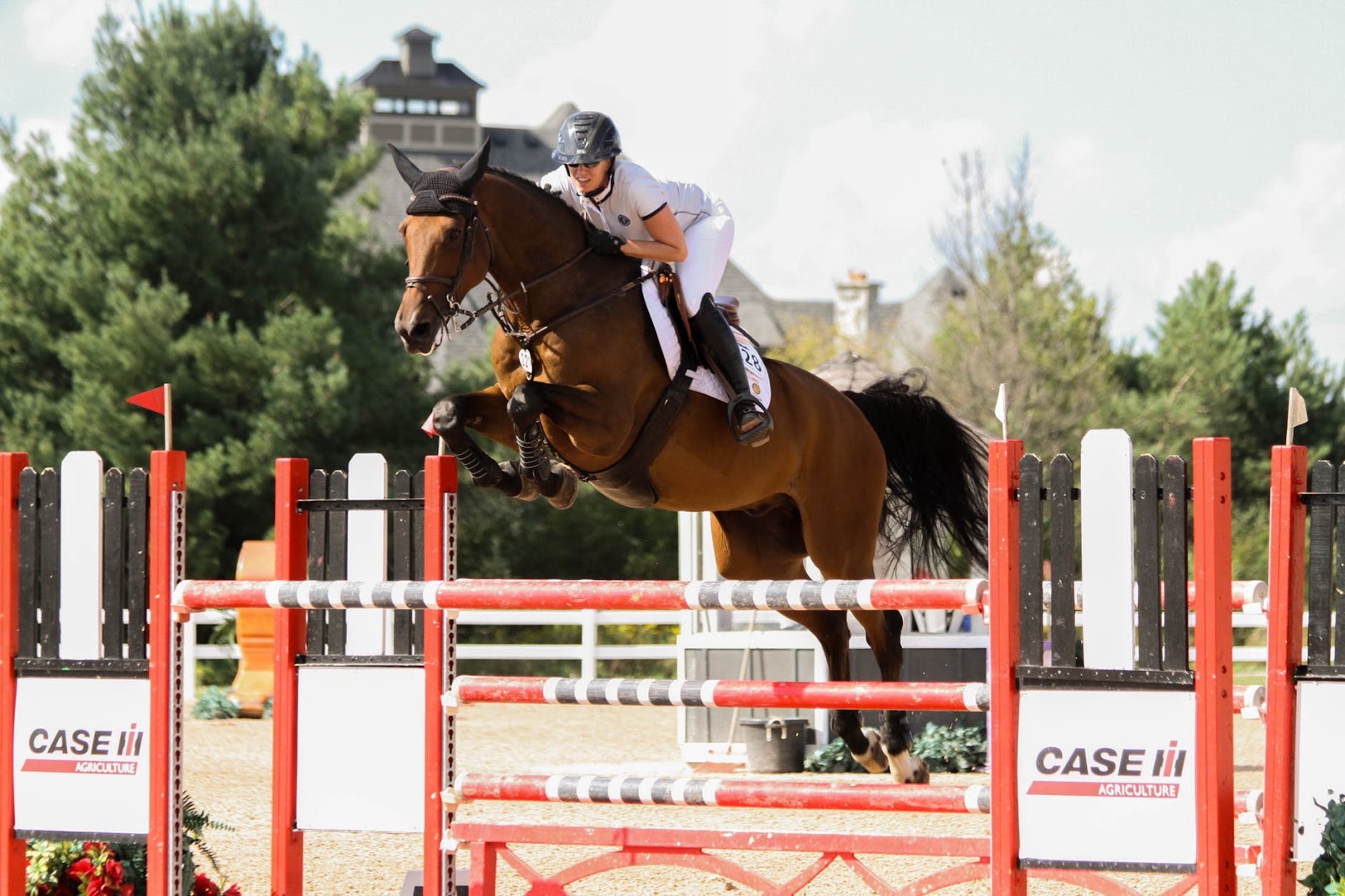
What equipment is needed for horse riding?

August 18, 2019
What equipment is needed for horse riding?

Indispensable for its safety, the equipment of the rider is also decisive for its comfort and its look! Some equestrian centers provide basic equipment for members to accelerate their learning. Nothing, however, is worth its own accessories to feel comfortable and serene on his mount. What are the essential elements for riding sessions?

Equipment for the rider

Whether it is the owner or a simple rider, whoever works with the horse must be equipped with the regulatory riding equipment, namely the helmet, boots, gloves and riding breeches. These two last ones make it possible to avoid the appearance of irritations or burns by dint of practicing this sport.
Also called bomb, the riding helmet is mandatory in equestrian centers. Its use is common sense. This element is essential, even for the more adventurous who wish to learn riding alone. It protects the rider in case of a fall, like the protective vest. To ensure optimal protection, it is imperative to ensure that it is perfectly adjusted to the user's head.
In riding, boots are also known as mini-chaps. They make it possible to limit the friction of the calves on the saddle. Thus, it is not only an aesthetic accessory. These boots must cover the calves up to the knees. On the other hand, the small heels serve to prevent the rider's feet from getting caught in the stirrup.

Material for the horse

In general, horse equipment is provided by equestrian centers. For new owners, however, it is essential to acquire these elements to ensure the safety and well-being of the rider and his mount. Basic horse equipment is often offered as a pack in specialized stores. These lots include saddle, net and carpet.
There are also products for the care of injured horses, retired, sports, etc. On the other hand, the equine needs a set of specific equipment for its daily transport. These elements include transport gaiters, tails protectors, neck protectors, a lanyard and a hay net. It is possible to acquire them gradually before the purchase of his equine to avoid being taken of course during the training or the training of the rider.
The basic equipment for a horse includes blankets, halter, grooming equipment (foot cure, curry broom, soft brush and cap), foot grease and Norway tar, resting straps, detanglers for horsehair and insect repellents. It is also necessary to provide some buckets for feeding and hydration of the horse.
Finally, do not neglect the first aid kit for equines. This usually contains round-toed scissors, disposable razors, disposable latex gloves, disinfectants, Betadine or alcohol. But also a thermometer, bandages, sterile compresses or cottons, sterile syringes and anti-inflammatories. The list is of course not exhaustive.
What equipment is needed for horse riding? What equipment is needed for horse riding? Reviewed by passion on August 18, 2019 Rating: 5

The recommended diet for your horse

August 17, 2019

The recommended diet for your horse


Food conditions the health and well-being of the horse. Knowing that this equine spends nearly three quarters of his time eating, it is essential to treat his diet. His daily rations must be adapted to his size, his activities and his place of life. This will prevent diseases.

Horse's basic diet

In their natural state, horses are herbivores. They feed mainly on grass and ligneous plants, forming what is commonly called "forage". In case of any deficiency, their instinct guides them automatically to the nutritional supplements they need. When they are housed in boxes or live in equestrian centers, it is essential to think about their diet and use food supplements.
If he lives in the meadow, the horse has in principle access to grass at will. It takes about 1 hectare per head for the equine to feel comfortable and take full advantage of this natural food.
However, it is best to separate this space in half to allow the grass to grow back onto the unoccupied area. Once it becomes green again, the owner has only to reverse and prohibit access to the grazed portion for some time.

Water and hay

Regardless of where you live, the horse needs to drink frequently. This equine can effectively drink up to 80 liters of water during the summer period. As a result, water is the first element to never neglect to take care of your horse.
Hay is indispensable for horses living in boxes. Ingesting this food limits among other risks of digestive disorders in equines. In addition, chewing hay keeps them from getting bored in this enclosed space.
A horse needs on average 1 kg of hay a day for a weight of 100 kg. Care should be taken to provide clean, dry, dust-free hay to avoid breathing problems such as emphysema.

Adapt the diet according to its rhythm of life

In addition to forage, the horse's essential food includes other foods such as barley, oats or corn. He also needs certain foods such as flakes and granules to supplement his daily intake of vitamins and other nutrients. These dietary supplements and hays may sometimes be needed in natural environments poor in grass.
In general, horses living in boxes feed mainly on hay. This food allows them to cover a large part of their nutritional needs and to pass the time. It would be even better if the owner could give them access to a meadow or provide them with fresh grass from time to time.
Otherwise, it is imperative to provide these equines with sufficient fiber rations per day. They will be protected from gastric diseases such as ulcers, colic, etc. Dietary supplements based on cereals, granules and other industrial foods are also recommended to avoid any deficiency related to the condition of life of the horse.

Feed his equine well

To feed your horse properly, you must ration the distribution of food, eat it according to a regular schedule and modify certain elements according to your activity or the season (special summer diet, special winter, etc.). In other words, instead of offering him a single hearty meal, it is better to offer him two or three meals a day.
On the other hand, when adding new foods, each new ingredient must be introduced gradually to avoid indigestion and other gastric problems. Indeed, his stomach needs to adapt to these changes. In addition, always ask for the advice of the veterinarian before any modification in the diet of his horse.
The recommended diet for your horse The recommended diet for your horse Reviewed by passion on August 17, 2019 Rating: 5

Safety instructions for the rider and his horse

August 17, 2019
Safety instructions for the rider and his horse

Riding is considered a risky sport because of the frequency and severity of accidents that may occur. It is therefore imperative to observe some basic safety precautions to protect the rider and his mount and the owner. In addition, in case of recklessness, many incidents can occur even while still on the ground.

Take precautions when approaching the horse

Before being a sport, horse riding is an activity involving the collaboration between man and a particularly robust animal. The horse is an imposing equine that can weigh up to 500 kg or more. In addition to his physique and physical strength, he is also characterized by the power of his jaw and hooves. As a result, this animal must be approached with great caution.
If it is in a meadow, be careful to approach it gently and always face. In this way, the rider is not exposed to hoofs or kicks, potentially life-threatening panic reactions. On the other hand, if he gets frightened and suddenly runs away, the equine may also be injured (tear, sprain, etc.) or cause panic within the group.
If the horse is surrounded by his companions, by passing him the halter, it is necessary to keep an eye on all the others and to avoid that they approach too much. Indeed, it is enough that one of them is frightened to cause a chain reaction of kicks and jostling. This situation can quickly become dramatic for the rider or owner who approaches the horse.
For a horse living in a box, it is important to approach it calmly and to quickly pass the halter. If it is not face, you must go slowly to the side to reach the level of its jaw and install the equipment. When in doubt or facing a horse with strong character, it is better to ask for help. Indeed, these animals feel fear or hesitation and respond with intimidation.

Use adapted equipment and always be vigilant

Riding gear and protective gear have been specially designed for riding with confidence. Therefore, they must be worn in all circumstances. Basic safety equipment includes helmet (or bomb), riding pants, protective vest and special boots. These are equipped with small heels so that the feet of the rider do not slip from the stirrup.
For optimum protection, each safety device must be approved and perfectly adjusted to the user. For example, if the bomb is too tight or too wide, the rider will be tempted to get rid of it and expose himself to significant risks (broken nose, concussions, etc.). The current standard for these helmets involves a thick shell, a 3-point fastener, a removable or flexible visor and the absence of a chin strap.
Beyond the accessories, it is necessary above all to be careful and common sense when practicing riding. This seemingly obvious principle avoids dramatic situations.
In addition, this recommendation applies to both beginners and experienced riders. If they are distracted, for example, their horses can suddenly panic, rush and put them on the ground or drag them into their race. In some cases, if he has inadvertently departed from his companions (for grazing, for example), the horse can gallop without warning to join them and cause a serious fall.
To summarize, whether one is on the ground or in the saddle, one must be very careful in the presence of this imposing animal. Protective equipment is also essential and must be carefully selected. In addition, common sense is  rigor in riding. By exercising vigilance and discernment, the rider reduces the risk of injury to himself and his horse.
Safety instructions for the rider and his horse Safety instructions for the rider and his horse Reviewed by passion on August 17, 2019 Rating: 5

The different exercises during the beginner's training

August 17, 2019
The different exercises during the beginner's training

Horse owners and riders are sometimes lacking inspiration for beginner training. However, it only takes a little imagination to create simple exercises, effective and fun with the available materials. The whole thing is to work on the basics and gradually create variants respecting the principles of learning the horse.

The goal of basic exercises

Most often, horse riding exercises are done using bowling pins and bars. Nevertheless, these accessories can also be replaced by tires, barrels or branches. The key is to create visual cues for the rider and his mount during the classic exercises such as slalom, eight digit, forest "bowling" or doors.
Overall, beginner drills are designed to work on key points such as direction, curvature, and longitudinal or lateral balance of the horse. It is therefore important to be careful with each pass to properly perform the planned movements. In addition, the rider must be patient throughout the training to avoid rushing the learning of his horse.
Slalom is one of the first essential exercises for beginners. For starters, it's better to just go through all the landmarks (pins, tires, barrels, etc.). In this way, the horse will become familiar with the course and understand what is expected of him. The rider can thus gradually work the change of direction and curvature at the level of each keel.
Gradually increasing the pace, it can also help his horse to work on its lateral balance. Once the horse has understood the exercise, the rider can change the distance between the pins and vary the course (for example, by skipping some pins or passing every other time).

Modify exercises by working simultaneously on different points

Indispensable in the training of beginners, the transitions make it possible to work the longitudinal balance of the equine. Indeed, to be able to chain the transitions, it will have to straighten up and remain attentive to the instructions of the rider for the continuation.
Basically, the exercise involves making a transition to each keel. Concretely, the young horse can, for example, make a transition not / stop to the keel 1, then a step / trot in 2, and a simple step or a stop in 3. It is however very important to think the transitions to the 'advance and try to stick to it to facilitate assimilation.
The eight digit can also work the curvature and direction, as well as lateral balance and transitions. This simple exercise requires the establishment of two pins on the course. The rider must then attempt to make two perfect circles to form the number 8. It is important to keep the horse well curved.
Once he is familiar with the exercise, the rider can begin to introduce other elements such as a change of pace at a specific marker or when moving to the other circle. He can also change the distance between the pins, the way of turning on the track, the pace on each circle, etc.
In any case, the rider must not lose sight of the main objective of these exercises: to promote the horse's assimilation by repetition by avoiding rushing.
The different exercises during the beginner's training The different exercises during the beginner's training Reviewed by passion on August 17, 2019 Rating: 5

Why is the horse's happiness important?

August 17, 2019
Why is the horse's happiness important?


Breeding a horse involves a wide variety of care to avoid physical suffering and ensure good health. It is also important to focus on your psychological balance to enable you to be happy. Once healthy and comfortable, the equine is not likely to develop abnormal behavior, even dangerous for others (horses or humans).

Definition of well-being in horses

According to professionals in the horse industry, the well-being of the horse is defined among other things by the absence of hunger and thirst, the presence of suitable habitat and the maintenance of a certain comfort condition. It also implies the absence of wounds and diseases, the absence of anxiety or fear, and the possibility of developing natural behaviors specific to one's species.
In nature, the horse has a rhythm of life peculiar to equidae. It feeds on grass, drinks a lot of water, lives in groups and evolves in large spaces. The basic needs of this animal are thus defined by its original living conditions.
Like other animals, the equine is happy when its basic needs - biological or psychological - are met. In addition to nutrition and routine maintenance, it is essential to take care of one's environment and social life to ensure one's happiness.
When not happy, the horse can become more reluctant, turbulent and even aggressive. This emotional state represents a significant risk to the safety of the rider, the owner and any other person in contact with the equine. Without necessarily reaching this extreme situation, the malaise of a horse also results in apathy, lethargy, or even a real depression.

Development of abnormal or risky behaviors

The horse must jaw at least ten thousand times a day to stabilize his nervous tension. In its natural environment, this physiological need goes unnoticed, because it grazes most of the time in order to ingest the quantity of grass required for its subsistence. It is different for horses living in boxes.
If he can not chew as much as necessary, the horse ends up with a large stock of nervous energy. He is therefore more stressed and tries to let off steam in another way. To soothe her anxiety and channel all this energy, the equine can, for example, gnaw the door of his box, scratching frantically or raging more often.
In all cases, the horse develops abnormal behavior, even pathological, which may lead to more serious diseases such as severe colic, aerophagic tic, etc. The daily walks (at least 4 km per day), sports activities and other physical exercises, also allow to evacuate all the energy stored by the horse.
In all these scenarios, the unfortunate equine finds himself in a state of great suffering and can no longer perform his duties on a daily basis. He can also develop irreversible disorders if his living conditions do not improve quickly. At this point, he is unable to behave "normally", to work with the man, or even to move among his peers.
The happiness of the horse is thus an essential parameter that any breeder or owner must take into account in order to avoid making him suffer or to expose himself to risks.
Why is the horse's happiness important? Why is the horse's happiness important? Reviewed by passion on August 17, 2019 Rating: 5

The different competitions of the world of equestrian sport

August 17, 2019
The different competitions of the world of equestrian sport


Riding has been considered as a sport in its own right since ancient times. As a result, there are currently many ways to practice this activity. From rodeo to jumps to polo, riders are spoiled for choice. They can also practice alone or in a team.

Olympic Games

The Olympic Games are among the most prestigious sports competitions in the world and represent a dream for many athletes. During this historic event, riders can participate in three disciplines, namely dressage, the CCE (Comprehensive Riding Contest) and the CSO (Show jumping competition). Riding events are the only ones to be mixed during the J.O.
For the training, the competition consists of making movements and figures in order to show the horse's abilities, the quality of his training and the great mastery of the rider. The judges observe both the sequence and the execution of the figures requested.
During the CSO, the horse must cross several obstacles in a certain order and as quickly as possible, without dropping them. The principle is simple, but the difficulty lies in the fact of combining dexterity and speed.
Finally, the CCE combines three exercises to be done with the same mount: a show jumping course, a cross-country race and a dressage recovery. Horses and their riders are graded according to the results obtained in each test.

World Equestrian Games

The World Equestrian Games are the world of sportsmen evolving in the universe of the horsemanship. This competition has eight disciplines, including dressage, EAC, CSO, endurance, driving, reining, paraquescent training (for riders with disabilities) and aerobatics.
The team comes in different categories depending on the number of horses driving the cart (1, 2 or 4) and the nature of the equine (ponies, draft horses or blood horses). The competitions also include several successive tests, including dressage, maneuverability and the marathon.
Endurance events are usually carried out on a marked course, with free or imposed speed, with or without a hitch. They can compete on a distance of 20 to 160 km, depending on the level of the competitors. Throughout the itinerary, veterinarians frequently check the vital signs of horses to limit the risk of accidents.
Inspired by western riding, reining consists of stringing together patterns to highlight the horse's handling thanks to the quality of his training. The equine is also guided with soft reins and a hand all the way. The complicity of the rider and his horse is really decisive for the quality of execution of these successive movements.

Team competitions

One of the World Equestrian Games, aerobatics consists of performing various figures on the horse and in music. These movements can be done at a gallop or at a pace, alone or in a team. To facilitate the performance of the choreography, the equine is equipped with a large carpet and a surfaix. The notation takes into account in particular the delicacy of the execution, the regularity of the pace and the artistic expression.
In a less artistic context, team equestrian sports are relatively numerous and are often difficult for riders and horses alike. Polo and horse ball are among the most popular disciplines in the world. The two teams usually compete on standardized pitches and use standardized equipment to be on an equal footing.
In polo, teams are made up of three to four riders. Substitutions are allowed for all players. The objective is to send the ball to the opponent's goal with the help of a mallet. After a goal, both teams exchange their camps. In this way, no party is favored by any defects on the lawn.
The horse-ball sees teams of four riders compete, plus two substitutes, in a career. They must send a ball equipped with leather handles in the opposite goal, which is located in height. In addition, players must make at least three passes before attempting to score. If the ball is on the ground, the riders must remain in the saddle to pick it up.
The different competitions of the world of equestrian sport The different competitions of the world of equestrian sport Reviewed by passion on August 17, 2019 Rating: 5

The importance of communication with one's horse

August 17, 2019
The importance of communication with one's horse


One of the greatest difficulties of equestrian sport comes from the fact that it requires a collaboration between the horse and the man. As a result, coaching is about teaching them how to work together. If the rider manages to communicate properly with his horse, they will become more accomplices and will be able to shine in their discipline.

The language of horses

Naturally living in a group, the horse uses many media (visual, olfactory, sound, tactile, etc.) to communicate with his peers. Thus, all his senses are constantly awake to receive any messages from his vis-à-vis. Licking, for example, is already a form of communication for these equines.
Sight plays a vital role in the communication and social life of horses. The information is transmitted through parades, facial expressions, postures, etc. On the other hand, the body language proves quite complex in this animal. Indeed, it is necessary at the same time to take into account all the movements at the level of each part of his body (naseau, tail, ears and position of the neck).
In general, posture and tone provide valuable information about the health and emotional state of a horse. The rider must be attentive to these signals to know the overall condition of his horse. Moreover, the passage between each posture is often progressive. In other words, the animal performs a set of postures announcing the next. It is therefore possible to anticipate his next movements and possibly his reactions in a given situation.
Several postures are frequently observed in the horse, including the grazing horse, looking away and standing at rest. When on alert, the equine tends to adopt a posture easy to recognize: the head up, the tail slightly raised with ears fixed and facing forward.

Why communicate with your horse?

Communication with his horse is based on observation, analysis and a great deal of intuition. By observing it carefully, the owner or rider is able to identify his emotional state as well as his intentions. However, the relevance of this analysis requires upstream observation of equine habits and trends.
The behavior problems of horses often come from a misunderstanding between species. Since man does not perceive his reactions to pain or other more subtle messages, the equine tries to multiply the supports and can even resort to violence. In other cases, the animal just turns a deaf ear and is more and more reluctant to exercise. It is therefore essential to improve as much as possible the communication with his horse.
In case of motor disorders or chronic diseases, the horse often informs his interlocutor through the many communication media at his disposal. However, it is difficult to identify the problem, its origin and its treatment, if the owner or the rider does not take the time to interpret the signals emitted by the equine.
In addition to serious situations, communication with the horse is important in many cases and in the daily maintenance of his protégé. For example, by being receptive to the "language" of the animal, it is possible to determine the best time to proceed to weaning without affecting the baby or the mother.
The importance of communication with one's horse The importance of communication with one's horse Reviewed by passion on August 17, 2019 Rating: 5
Powered by Blogger.